Reliable Power for Service Operations
Maintenance Facility Work in Bangor for facilities requiring electrical systems that support equipment and operations
Maintenance facilities depend on electrical systems that power diagnostic equipment, lifts, air compressors, welding stations, and the diverse tools required for vehicle and equipment service work. Camarderie Electric, LLC provides electrical installations and repairs tailored to the specific demands that maintenance and service facilities place on their electrical infrastructure. Licensed master electricians with facility electrical experience handle distribution systems designed for high-amperage welding loads, motor circuits for compressors and hydraulic equipment, and adequate outlet coverage for power tools throughout work areas.
Facility electrical work addresses both the permanent installations that power fixed equipment and the flexible distribution needed for portable tools that move between work bays. The electrical design must provide dedicated circuits for equipment with high starting currents, sufficient capacity for multiple simultaneous loads, and proper grounding for welding operations and sensitive diagnostic computers. Maine maintenance facilities also require electrical systems capable of handling winter heating loads without compromising capacity for equipment operation.
Request a facility electrical assessment to determine whether your current system supports all equipment demands and future additions.
What Changes After Facility Electrical Completes
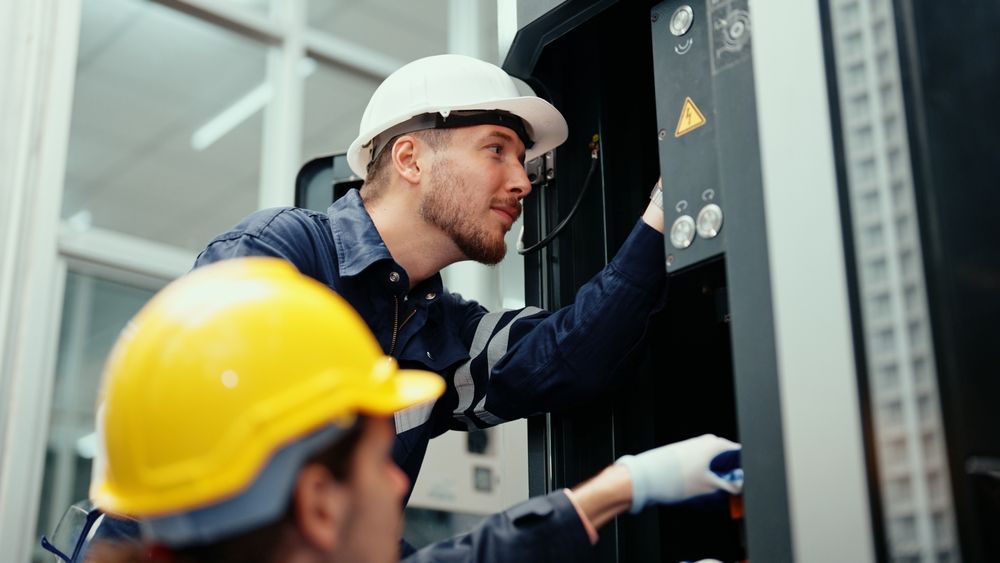
Facility electrical installations start by calculating total connected load across all equipment, determining service entrance capacity required, and designing circuit distribution that delivers power where work happens without excessive wire runs. Master electricians install panels located for convenient access to work bays, route circuits to minimize voltage drop on long runs, and provide disconnects at equipment locations for maintenance safety. The installation accounts for dust, moisture, and physical abuse that electrical components face in active service environments.
After electrical work is finished, you'll see circuits dedicated to high-draw equipment so welders and compressors don't trip breakers serving other loads, outlet configurations that match tool requirements throughout the facility, and distribution systems with capacity to add equipment as operations expand. Camarderie Electric, LLC installs facility electrical systems with craftsmanship that prevents loose connections at high-current terminations and ensures grounding integrity for welding circuits. The infrastructure supports current service operations while allowing flexibility for workflow changes.
Facility work also includes installing appropriate lighting circuits for work areas, providing power for overhead door operators and ventilation systems, and ensuring emergency circuits remain energized if main power fails. The electrical system integrates with all facility operations rather than treating power distribution as separate from the work performed there.
Questions Before Starting Your Project
Facility owners often ask about electrical capacity for specific equipment types and how systems can be designed to accommodate changing service demands over time.
What electrical capacity do maintenance facilities typically require?
Service entrance size depends on equipment mix, but facilities with multiple service bays, welding stations, and compressors typically need 200-amp or larger services with 240-volt three-phase distribution. Individual circuits for welders often require 50-amp or higher capacity, while general-purpose outlets serve lighter tool loads.
How are welding circuits different from standard power circuits?
Welding creates high inrush currents during arc initiation and sustained high loads during operation, which requires oversized conductors to prevent voltage drop and dedicated circuits to avoid nuisance trips on shared breakers. Proper grounding is critical to prevent welding current from following unintended paths through building structure or equipment frames.
Why do compressors and hydraulic equipment need dedicated circuits?
Motor-driven equipment draws several times its running current during startup, which can trip breakers sized only for running load. Dedicated circuits with properly sized overcurrent protection allow starting current without interrupting other facility circuits. This prevents diagnostic computers or control systems from losing power when compressors cycle on.
What outlet configurations work best for maintenance facilities in Bangor?
A mix of 120-volt general-purpose outlets for hand tools and lighting, 240-volt outlets for larger equipment, and strategically located floor or ceiling drops that bring power to work areas without extension cords crossing traffic paths provides flexible power distribution. Licensed master electricians position outlets based on typical workflow patterns.
How can facility electrical systems accommodate future equipment additions?
Installing panels with spare breaker positions, running empty conduit to anticipated equipment locations, and sizing the service entrance above current demand all provide expansion capability without replacing major infrastructure. Planning for growth during initial installation costs less than retrofitting capacity later.
Camarderie Electric, LLC brings specialized understanding of maintenance facility electrical demands to installations that support demanding service operations with reliable power distribution. Call (207) 404-0101 to discuss electrical requirements for new facilities or upgrades to existing service bay infrastructure.